From Table to Memory: How Alsancak's Premier Companions Are Redefining Gastronomy as a Cultural Experience
There is a particular kind of meal that transcends the act of eating — one in which the food, the setting, the conversation, and the company conspire to produce something that functions less like dinner and more like an education. In Alsancak, Turkey's most refined coastal district, this kind of meal is becoming increasingly available to American visitors who arrive with sophisticated tastes and the willingness to be genuinely surprised.
The architects of these experiences are, in many cases, the district's premium companions — professionals who have cultivated not only social grace and cultural knowledge, but a deep, working familiarity with the culinary traditions of the Aegean coast and the specific pleasures that Alsancak's remarkable food scene has to offer.
A City With Something to Prove at the Table
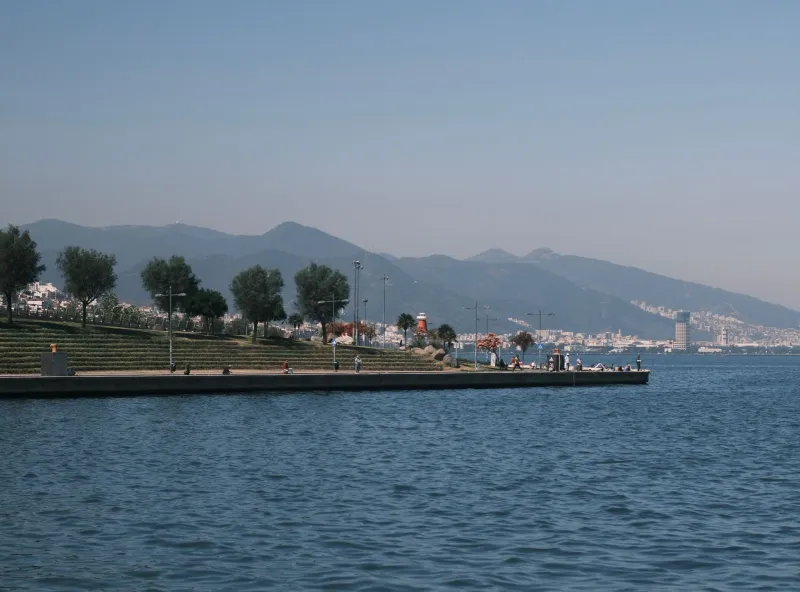
Izmir — and Alsancak in particular — occupies a distinctive position in the geography of Turkish cuisine. Unlike Istanbul, whose culinary identity is shaped by imperial grandeur and the convergence of dozens of regional traditions, Izmir's food culture is rooted in the specific bounty of the Aegean: fresh seafood pulled from nearby waters, olive oil pressed from centuries-old groves, herbs and vegetables grown in the fertile hinterland, and a Levantine-influenced mezze tradition that prizes simplicity, freshness, and balance above all.
For American visitors whose exposure to Turkish food may be limited to urban kebab counters or generic Mediterranean menus, the genuine Aegean table represents a revelation. But navigating it — knowing which establishments are authentic, which dishes to prioritize, how to sequence a proper mezze spread, when to defer to the proprietor's recommendation — requires knowledge that most travelers simply do not arrive with.
This is precisely where Alsancak's most accomplished companions enter the picture.
The Companion as Culinary Curator
Among the premium companions affiliated with Alsancak's leading agencies, a growing number have developed what might fairly be described as specialized culinary expertise. This goes well beyond knowing which restaurants are fashionable. It encompasses a genuine understanding of Turkish food culture — its regional variations, its seasonal rhythms, its social rituals — and the ability to translate that understanding into an experience that feels both intimate and illuminating for a visiting guest.
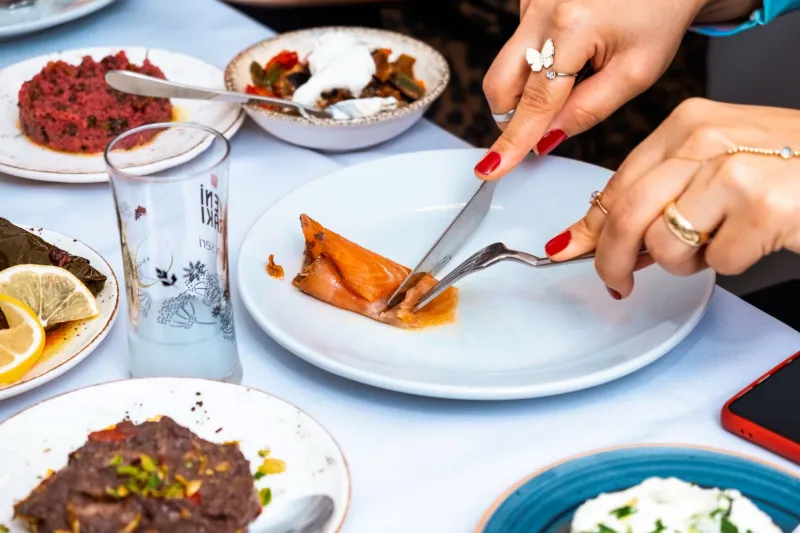
For an American client, an evening curated by such a companion might begin with a visit to a family-run meyhane tucked into one of Alsancak's quieter side streets, where the companion navigates the evening's menu in Turkish, selecting dishes that tell a coherent story about the region's culinary heritage. It might continue with a gentle tutorial on the proper pace of a raki-and-mezze progression — the specific cadence of conversation, small plates, and the anise-scented spirit that has structured social life on the Aegean coast for generations.
These are not performances staged for tourist consumption. They are, at their best, genuine acts of cultural sharing — and they leave an impression that no guidebook or food tour could replicate.
The Ritual Dimension of the Turkish Table
What many American visitors discover, often with some surprise, is that eating in Turkey is fundamentally a social act — one governed by rituals of hospitality, generosity, and communal pleasure that differ meaningfully from the dining customs most Americans carry with them.
A companion who understands these rituals and can convey their significance — explaining, for instance, why a host insists on refilling a glass before it is empty, or what it means to be offered the best piece of fish from a shared plate — transforms the meal into something richer than its ingredients. The food becomes a text, and the companion its interpreter.
For American executives and high-net-worth travelers accustomed to dining as a backdrop for deal-making or networking, this reorientation toward the table as a space of genuine pleasure and cultural exchange can be quietly transformative.
Beyond the Restaurant: Private and Bespoke Culinary Occasions
For clients seeking an experience that moves beyond even the finest public dining rooms, some of Alsancak's premium companions have begun facilitating more private and bespoke culinary occasions. These might include curated visits to the city's extraordinary open-air markets — where a companion's relationships with specific vendors can unlock access to produce, cheeses, and preserved goods unavailable to the casual shopper — followed by a privately arranged dinner in which those ingredients become the centerpiece.
Other clients have been guided through the specific wine and spirits traditions of the Aegean region: the indigenous grape varieties cultivated in the hills east of Izmir, the small-production rakı makers whose products rarely reach export markets, the artisanal producers of the region's celebrated olive oils. In each case, the companion serves as both guide and host — ensuring that the experience is not merely informative but genuinely pleasurable.
What Discerning American Travelers Are Finding
The American visitors who gravitate toward these gastronomically elevated companionship experiences tend to share certain characteristics: they travel frequently, they eat well at home, they are curious about the world beyond the familiar, and they are willing to invest in experiences that offer genuine depth rather than polished surface.
What they are finding in Alsancak — through companions who combine social elegance with authentic culinary knowledge — is an entry point into Turkish culture that is both more intimate and more memorable than anything a conventional itinerary could provide. They are sitting at tables where the food has been chosen with their particular tastes in mind, in company that can explain what they are eating and why it matters, in a city that has been quietly perfecting this form of generous, table-centered hospitality for centuries.
For those who have experienced it, the meal is rarely just a meal. It is, in the fullest sense, an event — one that tends to occupy a prominent place in the memory long after the flight home has landed.