Passport to Understanding: How Alsancak's Companions Serve as Living Guides to Turkish Culture for American Travelers

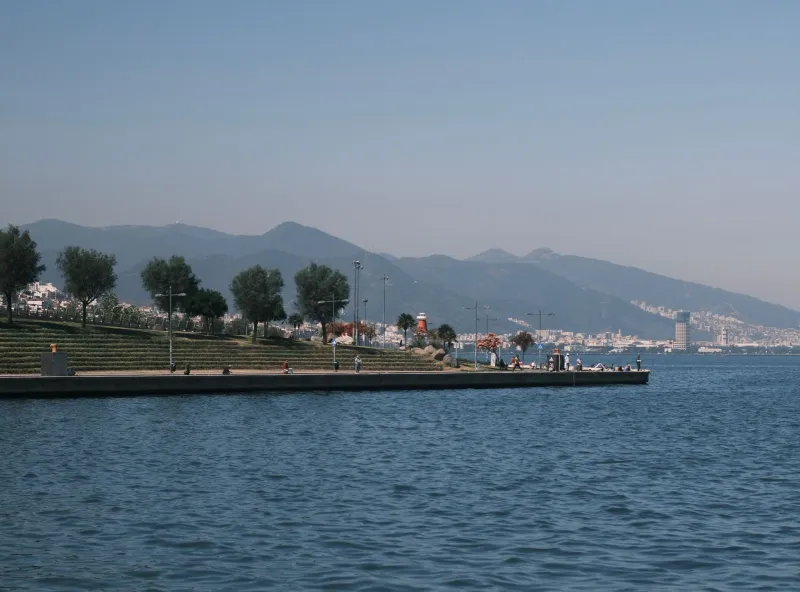
Photo: Dietmar Rabich, CC BY-SA 4.0, via Wikimedia Commons
Turkey occupies one of the most intellectually compelling positions in the contemporary world—a nation that is simultaneously ancient and urgently modern, geographically suspended between Europe and Asia, politically complex, culturally layered, and almost entirely misrepresented by Western media. For an American arriving in Alsancak with genuine curiosity and limited prior exposure, the gap between what they expect and what they actually encounter can be disorienting.
Alsancak's most accomplished companions have, over time, become remarkably adept at bridging that gap. Not as tour guides reciting rehearsed scripts, but as informed, intellectually engaged conversation partners who can contextualize what a client is seeing, hearing, and experiencing in real time—and do so with the warmth and candor of a trusted local friend.
More Than Translation: The Depth of Cultural Literacy
The cultural competency that distinguishes Alsancak's premier companions goes considerably beyond language fluency, though that is certainly part of it. Most speak English at a sophisticated level—not merely conversationally but with the vocabulary and rhetorical precision required for substantive intellectual exchange. Some speak additional European languages. But language is only the entry point.
What sets these professionals apart is the breadth and depth of their cultural knowledge. A companion affiliated with Deluxe Alsancak Escort is likely to be conversant in Ottoman history and its contemporary resonances, familiar with the major works of Turkish literature—from Orhan Pamuk's melancholic Istanbul meditations to Elif Şafak's explorations of gender and identity—and capable of discussing the current political landscape with the nuance that it demands.
For an American client who arrives having read a few Wikipedia articles and skimmed a travel magazine, this level of cultural intelligence is immediately apparent—and immediately valuable. It changes the nature of every conversation, every meal, every walk through the city.
Alsancak as a Cultural Classroom
The district of Alsancak is itself an extraordinary pedagogical environment for the culturally curious. Its layered architectural history—where Ottoman-era structures sit alongside Levantine merchant houses, early Republican modernist buildings, and contemporary design—offers a compressed visual narrative of the forces that have shaped modern Turkey. A companion who can read that landscape and translate it into accessible, engaging storytelling transforms a stroll down Kıbrıs Şehitleri Avenue into something approaching a living history seminar.
Beyond architecture, Alsancak's social world offers equally rich material. The district's café culture, its relationship to Izmir's historically secular and cosmopolitan identity, its role as a center of arts and music—all of these dimensions become accessible when explored in the company of someone who inhabits them daily. A companion can explain, for instance, why Izmir's political culture differs so markedly from Ankara's, or why the city's relationship to its Greek and Jewish heritage remains a subject of ongoing cultural negotiation. These are not topics that surface in conventional tourism.
The Social Customs Americans Most Frequently Misread
Every culture has its invisible grammar—the unspoken rules of interaction that natives navigate unconsciously and visitors violate inadvertently. Turkey is no exception, and American travelers, shaped by a cultural context that prizes directness, informality, and individual assertion, are particularly prone to certain misreadings.
Alsancak's companions are practiced at gently correcting these misreadings before they become social missteps. They can explain, for example, the significance of hospitality rituals—why declining a first offer of tea or food is expected, why accepting a second is obligatory—without making the client feel foolish for not knowing. They can clarify the social dynamics around gender interaction, religious observance, and political conversation in ways that allow the client to move through Turkish social environments with confidence rather than anxiety.
This kind of real-time cultural coaching is enormously practical, but it is also something more. It cultivates in the client a genuine appreciation for the internal logic of a culture quite different from their own. That appreciation—the shift from bewilderment to understanding—is one of the most rewarding experiences international travel can offer, and it rarely happens without a knowledgeable guide.
Contemporary Turkey: Beyond the Stereotypes
American media representations of Turkey tend to oscillate between two poles: the exotic Ottoman fantasy of domed mosques and bazaars, and the anxious geopolitical narrative of a nation at the intersection of competing global interests. Neither captures the lived reality of contemporary Turkish society with any accuracy, and both leave American visitors poorly prepared for what they actually encounter.
Alsancak's companions are particularly valuable in this regard because they live the complexity that media coverage flattens. They can speak to the experience of being a young, educated, cosmopolitan Turkish woman in 2024—the tensions, the aspirations, the cultural negotiations that define daily life. They can discuss the social impact of economic pressures, the evolution of gender norms, the generational divides in political outlook, and the ways in which global cultural influences are absorbed, adapted, and sometimes resisted.
For an American client genuinely interested in understanding the world—not merely visiting it—this kind of candid, personal perspective is irreplaceable. It is the difference between consuming Turkey as a backdrop and engaging with it as a living, dynamic society.
The Intellectual Preparation Behind the Experience
None of this cultural fluency is accidental. Alsancak's most accomplished companions invest deliberately and continuously in their intellectual development. They read widely—not just Turkish authors but international writers, political analysts, and cultural critics. They follow current events with genuine attention. They engage with art, film, and music as active participants rather than passive consumers.
This investment reflects a professional understanding that the American clients who seek premium companionship in Alsancak are, increasingly, people of considerable intellectual accomplishment themselves. Executives, academics, journalists, diplomats—individuals who have spent careers in environments where intellectual rigor is the baseline expectation. To serve as a genuine conversation partner for such clients requires a comparable standard of preparation.
The companions of Alsancak meet that standard—and in doing so, they offer something genuinely rare: a crossing of cultural distance that leaves both parties enriched.