Off the Beaten Promenade: Alsancak's Private Social World and Why Cultured American Travelers Are Taking Notice
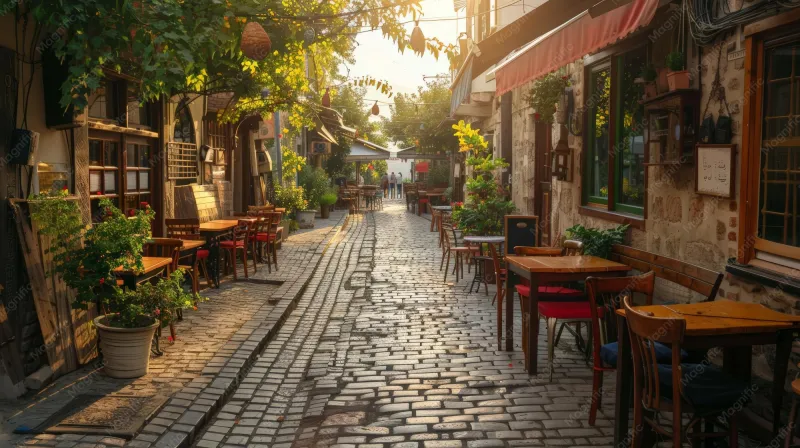
Photo: charming historic European neighborhood street cafe evening ambiance Turkey Izmir, via img.freepik.com
There is a particular kind of traveler for whom the standard Mediterranean itinerary has long since lost its appeal. They have done Santorini. They have navigated the crowds of the Amalfi Coast. They have endured the choreographed luxury of resort complexes that, despite their considerable investment in ambiance, ultimately deliver an experience indistinguishable from a hundred similar properties scattered across three continents. These travelers are not jaded — they are simply discerning. And increasingly, they are finding their way to Alsancak.
Izmir's most culturally layered district has developed a quiet reputation among a specific class of American traveler: one who prioritizes authenticity over spectacle, depth over breadth, and the kind of social intimacy that cannot be manufactured by a hotel concierge. What draws them here, beyond the obvious coastal beauty and the district's well-documented cosmopolitan character, is something more elusive — a sense that the most interesting aspects of Alsancak are the ones that require some effort, and perhaps the right company, to access.
The Neighborhoods That Don't Appear on Standard Maps
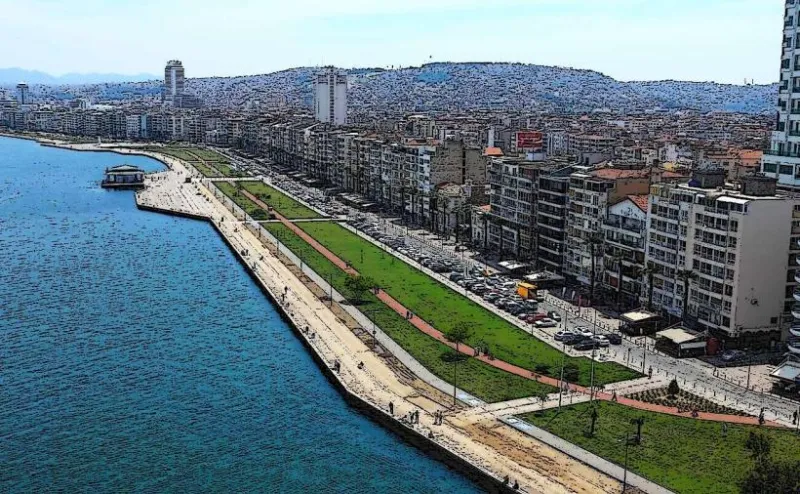
Alsancak's most familiar face is the Kordon — the waterfront promenade that stretches along the Gulf of Izmir and provides the backdrop for countless travel photographs. It is genuinely beautiful, and worth experiencing. But the travelers who return to Alsancak, who speak of it with a particular warmth to friends back home in Boston or Denver or Seattle, are rarely describing the Kordon. They are describing the streets that run perpendicular to it.
The residential blocks immediately inland from the waterfront contain some of the most architecturally striking streetscapes in western Turkey — rows of nineteenth-century Levantine townhouses, their facades layered with the accumulated aesthetic decisions of Greek, Armenian, Jewish, and Ottoman inhabitants across generations. Walking these streets in the early evening, when the light shifts and the neighborhood's residents begin their own social rituals, produces a form of cultural encounter that no organized tour can replicate.
Further inland, the transition into Alsancak's quieter residential quarters reveals a different social register entirely. Here, neighborhood meyhanes — traditional Turkish taverns that bear no resemblance to their tourist-facing counterparts — operate with an unhurried intimacy that rewards the patient visitor. A companion who knows these spaces, who understands their unwritten protocols and can navigate them with natural ease, transforms what might otherwise be an awkward intrusion into a genuinely immersive experience.
Curated Dining as Cultural Immersion
Alsancak's restaurant landscape is considerably more nuanced than the waterfront options visible to most visitors. The district supports a collection of intimate dining rooms — some operating without significant online presence, others known primarily through personal recommendation — that represent some of the most compelling food experiences available anywhere along the Turkish Aegean coast.
These venues share certain qualities: small dining rooms that prioritize atmosphere over capacity, menus built around seasonal Aegean ingredients with genuine culinary intelligence, and a relationship between kitchen and table that reflects the Mediterranean conviction that a meal is a social event deserving of full attention. For American clients accustomed to the best that cities like New York or Chicago offer in terms of serious dining, these establishments provide a point of genuine connection — a shared language of culinary excellence that transcends the usual tourist-local divide.
Accessing this layer of Alsancak's dining culture typically requires local knowledge. Reservations at the most sought-after intimate venues are not made through international booking platforms. They are made through relationships. A companion who maintains these relationships, and who understands how to navigate the social expectations of these spaces, provides a form of access that no amount of independent research can reliably replicate.
Exclusive Social Venues and the Art of the Private Evening
Beyond dining, Alsancak supports a collection of social venues — private clubs, gallery spaces, rooftop bars accessible only through membership or personal introduction — that constitute an entirely separate social world from the one visible to ordinary tourists. These spaces serve Izmir's professional and cultural elite: architects, academics, entrepreneurs, artists, and the international visitors who move in similar circles.
For sophisticated American travelers, entry into this social world represents something qualitatively different from the conventional luxury travel experience. It is not about exclusivity for its own sake — it is about the quality of encounter that genuine social integration makes possible. Conversations in these settings tend to be substantive. The perspectives on offer are genuinely local rather than filtered through the hospitality industry's approximation of local character.
A premium companion who moves naturally within these circles does more than provide pleasant company. She functions as a social interpreter — someone who can contextualize what a visitor is experiencing, facilitate introductions with the appropriate degree of formality, and ensure that her client engages with these environments in a way that is both comfortable and culturally intelligent.
Alsancak Against the Broader Mediterranean Canvas
The case for Alsancak as an alternative to more heavily trafficked Mediterranean destinations rests on a straightforward argument: the district offers a comparable level of natural beauty, historical depth, and culinary sophistication, while delivering something that the overexposed alternatives increasingly cannot — the experience of being genuinely somewhere rather than merely somewhere scenic.
The Greek islands, the Croatian coast, and the more celebrated corners of southern Italy all offer extraordinary experiences. But they have also, in many cases, been so thoroughly absorbed into the global luxury travel infrastructure that they now function primarily as settings for a pre-scripted narrative. Alsancak has not yet made that compromise. Its social world remains largely intact, its neighborhoods genuinely inhabited, its best experiences still requiring some degree of personal investment to access.
For American travelers who have arrived at the conclusion that the most valuable thing luxury travel can offer is not comfort — which can be purchased anywhere — but genuine encounter, Alsancak presents a compelling proposition. Particularly when that encounter is guided by someone who knows the district not as a destination, but as home.